English (United Kingdom)
  Deutsch (Deutschland)
  Français (France)
  Magyar (Magyarország)
  Italiano (IT)
  Slovenščina (SL)
  Svenska

May 2026
There was no special ceremony in the classroom. No balloons, no thank-you speeches. On the table stood a tray of homemade cookies brought by one of the participants, and on the screen was a simple document titled: “What I know today that I didn’t know before.”
I suggested that everyone write down one thing. Just one.
At first, they were silent. Not because they had nothing to write, but because they had to pause. Looking back isn’t always second nature.
Mrs. Marija was the first to start: “I submit an e-application without help.”
Mr. Robert added: “If something isn’t working, I check the settings first.”
Someone else wrote: “I dare to comment, but I think it through.”
The sentences lined up on the screen. Each one simple on its own. Together, however, they traced something else—a path.
Not spectacular transformations. Not stories of complete mastery of technology. But a sequence of small shifts that, over the months, had accumulated into something bigger.
In that moment, we truly saw the scope of the process for the first time.
We used to measure knowledge by what someone could do
At the start of the project, participants often thought in terms of “I know—I don’t know.” Can you send an email? Can you open a document? Can you attach a file?
Knowledge was understood as a to-do list. If you completed a task, you were successful. If not, you had a gap.
Today, looking back, we see that the change was more profound.
DigComp Competence 5.4—digital development and lifelong learning—is not just about recognizing what we don’t know. It’s about the ability to track our own progress, adapt to new demands, and understand learning as an ongoing process.
The digital world doesn’t stop. And neither do we.
From a one-time course to a lasting mindset
At the beginning, some participants asked: “How many hours do we have left?” “When will we finish?”
The question was logical. We’re used to education having a beginning and an end. You complete the program, receive a certificate, close the folder.
But digital competencies don’t work that way. Once you master one app, a new one comes along. Once you get used to one form of an e-service, it gets updated.
Over time, we began to talk about learning as a constant companion. Not as an obligation, but as a reality.
One of the participants said at the end of the program: “Now I know I’ll have to keep learning. And that’s no longer a problem for me.”
That sentence meant more than just mastering a single tool.
Small shifts that change one’s perspective
When we analyzed the participants’ initial notes, we found a great deal of hesitation. “I know almost nothing.” “I’m too slow.” “This isn’t for me.”
By the end, the statements were different. “I’ve learned how to tackle new things.” “I know where to find help.” “I don’t give up right away.”
The difference wasn’t just in technical skills. It was in their self-perception.
Digital development isn’t a competition with others. It’s a process of adapting to a changing environment.
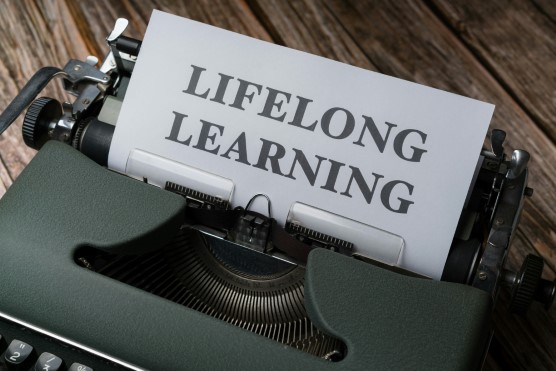
Reflection by UPI Žalec: A Look in the Mirror
When we looked back, we didn’t just see the participants’ progress. We also saw our own journey.
At the beginning, we understood the project primarily as a transfer of knowledge. We prepared content, schedules, and materials.
But through the process, we realized that our role is broader. We are not merely intermediaries of information, but co-creators of a learning environment that fosters trust, reflection, and independence.
We, too, had to learn. To adjust the pace. To incorporate more repetition. To allow for more questions. To accept that progress is not always linear.
Digital development affected everyone—participants and facilitators alike.
Looking Back as a Prerequisite for Looking Forward
As we read the notes on the screen that day, I asked the participants, “What would you have said to yourselves in the first session?”
Mrs. Marija smiled: “That it’s not so bad.”
Mr. Robert added: “That in a few months, I’ll be the one fixing the projector.”
The laughter in the room wasn’t a mockery of our initial uncertainty. It was a sign of distance. When we can look back on our past uncertainty with a touch of humor, it means we’ve moved past it.
Looking back isn’t nostalgic. It’s analytical. It helps us understand how far we’ve come.
We used to wonder if we could do it. Today we wonder what comes next
That’s perhaps the most noticeable change. In the beginning, the key question was: “Will I be able to do this?”
Today, the question is more often: “What else is out there?”
Curiosity has replaced fear.
This doesn’t mean that everyone has become a digital expert. It does mean, however, that they have become active participants in their own development.
The Journey as a Process, Not a Destination
When we concluded the meeting, we didn’t hand out diplomas with grand speeches. We didn’t talk about the end. We talked about moving forward.
Digital competencies aren’t a destination where we can say, “Now I know enough.” They are the ability to keep up with changes, recognize new gaps, and address them without panic.
Perhaps this is the biggest shift we’ve seen.
- Not that someone knows how to submit an online application
- Not that they know how to solve a technical problem
- Not that they know how to collaborate on a shared document
But rather that they understand that learning is part of their daily life—and that this is not a threat, but an opportunity.
When we looked back, we didn’t see perfection. We saw progress.
And when you see the path you’ve already walked, the next step no longer seems so unknown.