English (United Kingdom)
  Deutsch (Deutschland)
  Français (France)
  Magyar (Magyarország)
  Italiano (IT)
  Slovenščina (SL)
  Svenska

September 2024
At our adult education center, we often hear people say, “I know how to use Google.”
And it’s true—most people know how to open a browser, type in a question, and press Enter. Thousands of results appear on the screen. At first glance, the task is complete.
But in reality, that’s when it really begins.
Let’s recall a participant who was looking for information on healthy eating. She found an article that very confidently claimed that a certain food was “dangerous” and should be completely eliminated from the diet. When we asked her where the article came from, she shrugged. “It’s on the internet,” she said. “It must be true.”
That answer wasn’t stupid. It was honest—and very common.
We used to search for information slowly
Years ago, finding information took effort. If you wanted to know something, you asked someone with experience. Or you went to the library. Or you leafed through an encyclopedia that had that distinctive smell of paper and dust.
That process was slower. But it had one important feature: we thought about the source.
We knew who the author of the book was. We knew that books weren’t written overnight. There was a sense of responsibility.
Today, however, information is fast. So fast that we often don’t have time to think about it.
And that is precisely the challenge of modern digital literacy.
The problem isn’t that we don’t know how to search. The problem is that we don’t know how to choose
When we observe our participants, we see that they know how to find information. What causes them trouble is deciding which information is reliable.
One person clicks on the first result. Another clicks on the one with the most interesting title. A third chooses the one that confirms what they already believe.
That’s human nature.
We do it too.
But digital literacy means something more. It means we know how to take a step back and ask ourselves:
- Who wrote this?
- Why did they write this?
- Are there other opinions?
These aren’t technical questions. These are questions of judgment.
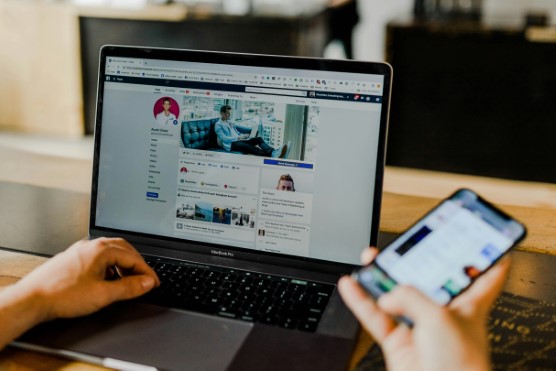
One of the most beautiful moments happens when someone starts to doubt
This may sound strange, but it’s true.
When a participant says, “Wait, I don’t think that’s reliable,” we know something important has happened.
Not because they found incorrect information. But because they started thinking.
Let’s recall the man who once very confidently claimed that a certain news story was true because he had seen it on social media. When we looked at the source together, he realized it was a satirical site. He laughed and said, “Well, now I’ve learned something.”
That wasn’t a failure. It was a success.
Digital literacy isn’t about never making mistakes. Digital literacy is about learning from mistakes.
The internet is not a library. It is a marketplace
Anyone can publish almost anything on the internet. This is one of its greatest strengths—and one of its greatest dangers.
At our adult education center, we don’t teach people not to trust the Internet. We teach them to think.
We teach them that not every website is the same. That not every piece of information is verified. That not every photograph is real.
And most importantly—we teach them that they have the right to ask questions.
The biggest change happens in their self-confidence
When someone realizes for the first time that they can judge for themselves whether information is reliable, something significant happens.
They no longer feel lost. They no longer feel dependent on others. They become independent.
We see this in their eyes. In the way they use a computer. In the way they ask questions.
They are no longer just looking for answers. They are seeking understanding. And that is the essence of digital competence.
***
DigComp Competence related: Competence Area 1: Data Literacy