11-12 June 2025
The fourth transnational coordination meeting of the DigCompAE project was held on 11-12 June 2025 in Uppsala, Sweden, hosted by our consortium member Folkuniversitetet. The seven organisations met in order to plan the next steps to be done. Main focus was on starting the second main part of Work Package 5: providing live reporting about the 7 organisations' attempts to integrate DigComp - the European reference framework for digital competences of citizens - into their everyday work practices.
To this end, we first shared information about steps done so far for DigComp integration, and about obstacles and difficulties met so far in the process. We did this in a moderated peer consulting approach, with partners meeting country-wise in pairs and discussing together their specific open questions, hoping that through sharing them with peers solutions or new perspectives might come up. After 5 (plus x) minutes, pairs were changed; the process was repeated three times. The results were noted on paper slips and collected on a paper wall along a timeline, to visualize next steps for each organisations.
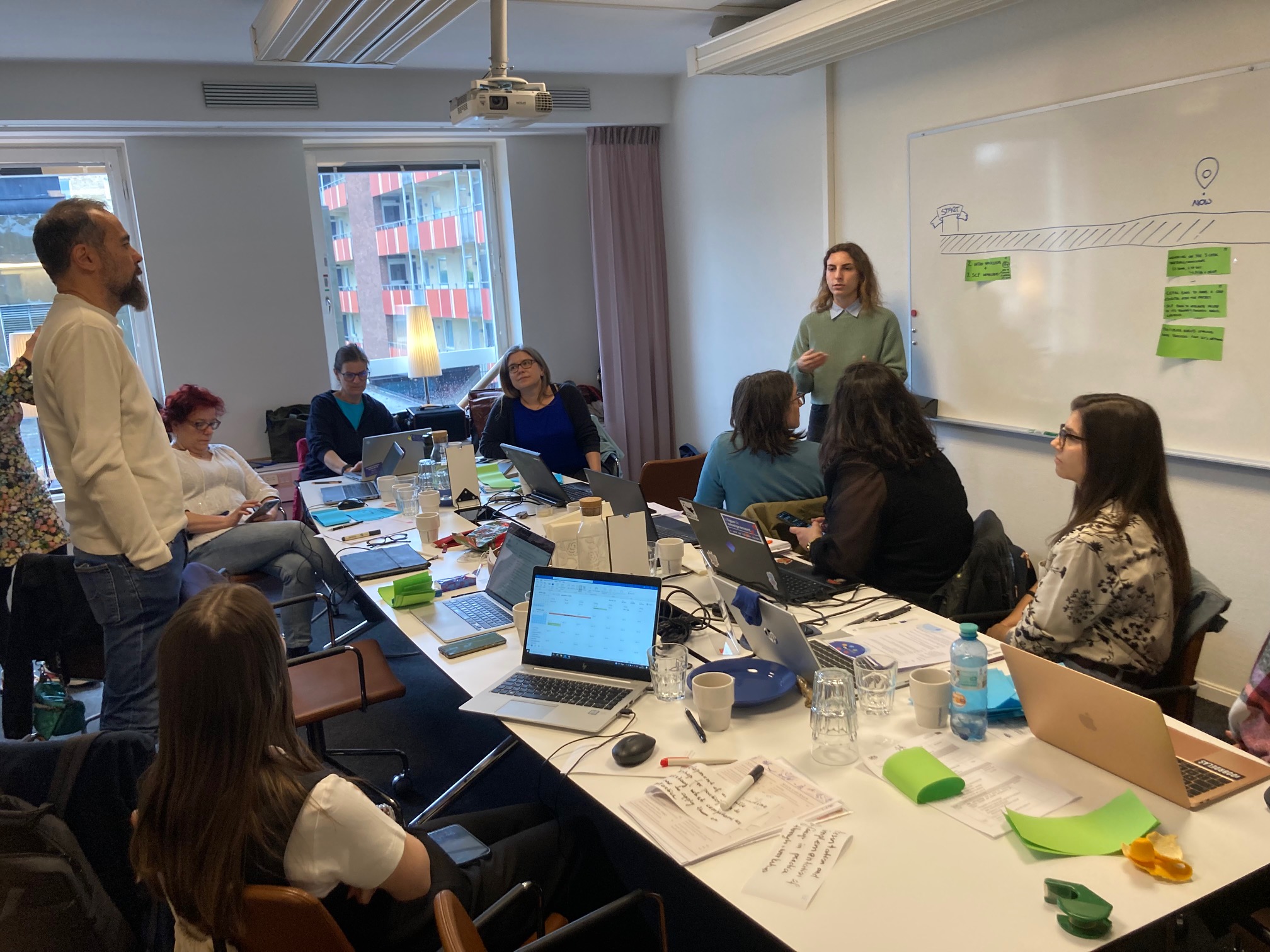 Intensive discussion on how to implement the live reporting. Photo: CG
This served for sharing experience between organisations, and to help everybody in the team getting a picture of what other organisations do in order to fulfil the complex task.
And important step was then introducing the tool for the "Live Reporting" (the blog section of this website), and to clarifying the task: provide to the interested (expert) public, especially other adult educators, insight into our individual attempts to make DigComp an intrinsic part of our everyday work process in adult education planning and offering.
Other topics of the meeting: We shared our experience with the ongoing staff training activities: each of the seven organisations in the consortium is currently providing training to their staff in order to make them fit for working with DigComp; starting with making them familiar with DigComp and developing their own understanding of and attitude towards it: What is DigComp? Why does it exist? Who created it? How can we use it? Does it make sense for us, or what would we have to change so that it makes sense for us? - Partners reported about their experience so far, including their biggest obstacles, their best lessons learned, and the most useful feedback by workshop participants they so far received.
As the meeting was held in a separate venue close to the city centre, we spent Tuesday afternoon (after the end of the work session at 17:00) for a walk over to Folkuniversitetet, where our colloeague Anastasija Tsaruk introduced us to the facility (classrooms, offices, etc.) and to the various lines of work done by Folkuniversitetet.
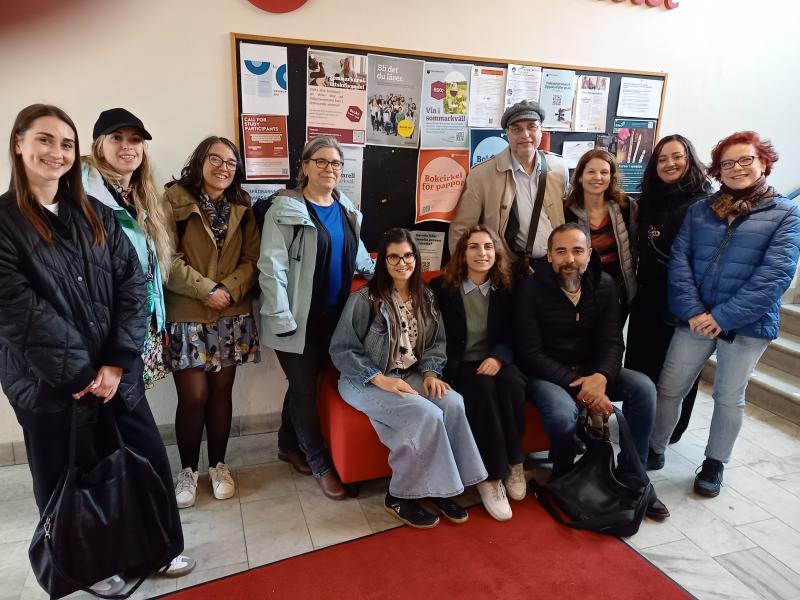 The DigCompAE team visiting Folkuniversitetet in Uppsala