The original DigComp as published by the EU groups 21 specific digital competences into five areas.
These are:
- Information and data security
- Collaboration and communication
- Digital content creation
- Safety
- Problem solving
When we started into planning how do address these areas (and the competences therein) in our everyday practice as an adult education provider, we quickly recogized that - from our perspective - something was missing: an area that would include very basic skills such as switching on a computer, or being able to type on a keyboard. In adult education, we often work with people who have very little formal education, and basic skills are an important issue.
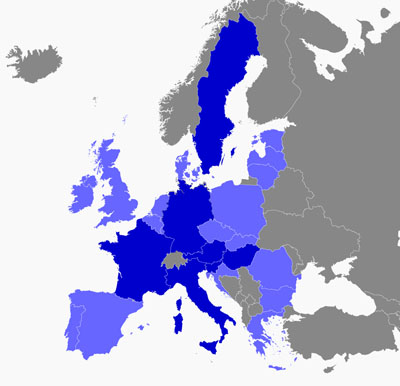
Then wie discovered that there was an alternative approach in use in Austria: Austria had developed an own version of DigComp where they added an additional field for basic skills related to the digital world. This was the solution we needed. We decided to work with the Austrian model.
A problem with terminology
There is one problem with the DigComp nomenclature: as the five areas of DigComp (original version) are numbered 1-5, one can easily get the impression that there is something like a hierarchy amongst them. This is even more so when we add an area for very basic skills (such as switching on a computer) and number it "0" (zero).